 Add to Chrome
 Add to Firefox
 Add to Edge
Artificial-Intelligence-Assisted Multi-Modal Terahertz Sensing and Environment Reconstruction
May 31, 2026
Multi-modal sensing is an important enabler for future environment-aware wireless systems, since a single sensing modality is generally insufficient to provide accurate metric geometry, material awareness, and semantic interpretability in complex environments. This paper presents a measurement-based multi-modal THz sensing and vision framework for indoor environment reconstruction. A three-dimensional monostatic THz channel sounding system operating at 290-310 GHz is integrated with an omnidirectional fisheye camera to acquire radio-frequency and visual observations from a common sensing viewpoint. From the measured THz data, a signal processing pipeline extracts multipath components and infers geometryand material-consistent structural primitives through trajectory tracking-assisted parameter estimation, graph-based structure discovery, planar reconstruction, and reflection-loss analysis. In parallel, AI-based visual perception modules extract object-level semantic masks and depth priors from panoramic images. To associate these heterogeneous representations, an agentic-AI-based task-driven THz-agent module is developed to select appropriate integration tools according to the attributes of the modality-specific outputs. Through angular alignment and consistency analysis, THz-derived metric geometry and material information are associated with vision-derived semantic regions and depth priors, enabling geometry-consistent and semantically interpretable environment reconstruction directly from measurements. Experimental validation in the indoor L-shaped hallway demonstrates that the proposed framework reconstructs dominant structural elements with centimeter-level accuracy while identifying semantic categories and material attributes of representative indoor objects.

On Spatial Degree-of-Freedom Analysis of Near-Field Multipath Channels for Ultra-massive MIMO Systems
May 29, 2026The transition to near-field (NF) communications in ultra-massive multiple-input multiple-output (UM-MIMO) systems fundamentally alters the spatial degrees of freedom (DoF) of wireless channels. While the NF DoF of line-of-sight (LoS) transmission channels is well-characterized in the literature, the DoF in NF multipath scenarios remains underexplored. This paper investigates the spatial DoF of NF UM-MIMO channels under practical multipath conditions. A generic DoF metric is derived by modeling multipath propagation and analyzing the resulting eigenvalue distribution based on the Green' s function representation of the channel. The DoF contribution of each path is determined by the product of the effective electrical aperture and the subtended solid angle, and the total DoF is obtained through the effective union of spatially resolvable path contributions. A mapping between the eigenvalue distribution and multipath powers is further established. Numerical simulations and real-world NF channel measurements at 28-30 GHz with 720 array elements are conducted for validation in both LoS multipath and non-LoS scenarios. The results show that multipath propagation can significantly increase the spatial DoF and that the proposed metric accurately predicts the DoF of practical NF channels. The proposed framework provides a practical tool for DoF prediction and supports capacity analysis and spatial multiplexing design in future NF UM-MIMO systems.
CoDA: Color Distribution Probing for Efficient and Generalizable AI-Generated Image Detection
May 23, 2026AI-generated image detection faces a persistent trade-off between generalization and efficiency: lightweight artifact-based methods often degrade on unseen generators or domains, whereas more robust large-scale models are computationally expensive. Meanwhile, existing benchmarks mainly focus on cross-model evaluation in photorealistic settings, leaving cross-domain robustness underexplored. To address this gap, we introduce FakeForm, a large-scale benchmark with approximately 370,000 images across 62 diverse domains for both cross-model and cross-domain evaluation. Motivated by this broader setting, we revisit color-distribution probing as an efficient complementary cue for AI-generated image detection. We observe that, especially for photographic content, real photographs tend to exhibit smoother and more stable color patterns, whereas synthetic images often show characteristic color imbalances introduced by neural generation. Based on this observation, we propose CoDA, a compact 1.48M-parameter detector built on a Noise-Quantization Probe, together with a theoretical analysis linking probe responses to color non-uniformity. Experiments show that CoDA achieves state-of-the-art performance on standard benchmarks and the best results on the challenging cross-domain evaluation of FakeForm, while remaining highly competitive in cross-model photorealistic settings. These results suggest that persistent generative artifacts can provide a practical foundation for efficient and robust AI-generated image detection. The models and FakeForm benchmark will be made publicly available.
Does Pass Rate Tell the Whole Story? Evaluating Design Constraint Compliance in LLM-based Issue Resolution
Apr 07, 2026Repository-level issue resolution benchmarks have become a standard testbed for evaluating LLM-based agents, yet success is still predominantly measured by test pass rates. In practice, however, acceptable patches must also comply with project-specific design constraints, such as architectural conventions, error-handling policies, and maintainability requirements, which are rarely encoded in tests and are often documented only implicitly in code review discussions. This paper introduces \textit{design-aware issue resolution} and presents \bench{}, a benchmark that makes such implicit design constraints explicit and measurable. \bench{} is constructed by mining and validating design constraints from real-world pull requests, linking them to issue instances, and automatically checking patch compliance using an LLM-based verifier, yielding 495 issues and 1,787 validated constraints across six repositories, aligned with SWE-bench-Verified and SWE-bench-Pro. Experiments with state-of-the-art agents show that test-based correctness substantially overestimates patch quality: fewer than half of resolved issues are fully design-satisfying, design violations are widespread, and functional correctness exhibits negligible statistical association with design satisfaction. While providing issue-specific design guidance reduces violations, substantial non-compliance remains, highlighting a fundamental gap in current agent capabilities and motivating design-aware evaluation beyond functional correctness.
A Novel Multi-Reference-Point Modeling Framework for Monostatic Background Channel: Toward 3GPP ISAC Standardization
Nov 05, 2025Integrated Sensing and Communication (ISAC) has been identified as a key 6G application by ITU and 3GPP. A realistic, standard-compatible channel model is essential for ISAC system design. To characterize the impact of Sensing Targets (STs), 3GPP defines ISAC channel as a combination of target and background channels, comprising multipath components related to STs and those originating solely from the environment, respectively. Although the background channel does not carry direct ST information, its accurate modeling is critical for evaluating sensing performance, especially in complex environments. Existing communication standards characterize propagation between separated transmitter (Tx) and receiver (Rx). However, modeling background channels in the ISAC monostatic mode, where the Tx and Rx are co-located, remains a pressing challenge. In this paper, we firstly conduct ISAC monostatic background channel measurements for an indoor scenario at 28 GHz. Realistic channel parameters are extracted, revealing pronounced single-hop propagation and discrete multipath distribution. Inspired by these properties, a novel stochastic model is proposed to characterizing the ISAC monostatic background channel as the superposition of sub-channels between the monostatic Tx&Rx and multiple communication Rx-like Reference Points (RPs). This model is compatible with standardizations, and a 3GPP-extended implementation framework is introduced. Finally, a genetic algorithm-based method is proposed to extract the optimal number and placement of multi-RPs. The optimization approach and modeling framework are validated by comparing measured and simulated channel parameters. Results demonstrate that the proposed model effectively captures monostatic background channel characteristics, addresses a critical gap in ISAC channel modeling, and supports 6G standardization.
F2RVLM: Boosting Fine-grained Fragment Retrieval for Multi-Modal Long-form Dialogue with Vision Language Model
Aug 25, 2025Traditional dialogue retrieval aims to select the most appropriate utterance or image from recent dialogue history. However, they often fail to meet users' actual needs for revisiting semantically coherent content scattered across long-form conversations. To fill this gap, we define the Fine-grained Fragment Retrieval (FFR) task, requiring models to locate query-relevant fragments, comprising both utterances and images, from multimodal long-form dialogues. As a foundation for FFR, we construct MLDR, the longest-turn multimodal dialogue retrieval dataset to date, averaging 25.45 turns per dialogue, with each naturally spanning three distinct topics. To evaluate generalization in real-world scenarios, we curate and annotate a WeChat-based test set comprising real-world multimodal dialogues with an average of 75.38 turns. Building on these resources, we explore existing generation-based Vision-Language Models (VLMs) on FFR and observe that they often retrieve incoherent utterance-image fragments. While optimized for generating responses from visual-textual inputs, these models lack explicit supervision to ensure semantic coherence within retrieved fragments. To this end, we propose F2RVLM, a generative retrieval model trained in a two-stage paradigm: (1) supervised fine-tuning to inject fragment-level retrieval knowledge, and (2) GRPO-based reinforcement learning with multi-objective rewards promoting semantic precision, relevance, and contextual coherence. To handle varying intra-fragment complexity, from locally dense to sparsely distributed, we introduce difficulty-aware curriculum sampling that ranks training instances by model-predicted difficulty and gradually exposes the model to harder samples. This boosts reasoning ability in long, multi-turn contexts. F2RVLM outperforms popular VLMs in both in-domain and real-domain settings, demonstrating superior retrieval performance.
A Unified Deterministic Channel Model for Multi-Type RIS with Reflective, Transmissive, and Polarization Operations
May 12, 2025Reconfigurable Intelligent Surface (RIS) technologies have been considered as a promising enabler for 6G, enabling advantageous control of electromagnetic (EM) propagation. RIS can be categorized into multiple types based on their reflective/transmissive modes and polarization control capabilities, all of which are expected to be widely deployed in practical environments. A reliable RIS channel model is essential for the design and development of RIS communication systems. While deterministic modeling approaches such as ray-tracing (RT) offer significant benefits, a unified model that accommodates all RIS types is still lacking. This paper addresses this gap by developing a high-precision deterministic channel model based on RT, supporting multiple RIS types: reflective, transmissive, hybrid, and three polarization operation modes. To achieve this, a unified EM response model for the aforementioned RIS types is developed. The reflection and transmission coefficients of RIS elements are derived using a tensor-based equivalent impedance approach, followed by calculating the scattered fields of the RIS to establish an EM response model. The performance of different RIS types is compared through simulations in typical scenarios. During this process, passive and lossless constraints on the reflection and transmission coefficients are incorporated to ensure fairness in the performance evaluation. Simulation results validate the framework's accuracy in characterizing the RIS channel, and specific cases tailored for dual-polarization independent control and polarization rotating RISs are highlighted as insights for their future deployment. This work can be helpful for the evaluation and optimization of RIS-enabled wireless communication systems.
Control-CLIP: Decoupling Category and Style Guidance in CLIP for Specific-Domain Generation
Feb 17, 2025Text-to-image diffusion models have shown remarkable capabilities of generating high-quality images closely aligned with textual inputs. However, the effectiveness of text guidance heavily relies on the CLIP text encoder, which is trained to pay more attention to general content but struggles to capture semantics in specific domains like styles. As a result, generation models tend to fail on prompts like "a photo of a cat in Pokemon style" in terms of simply producing images depicting "a photo of a cat". To fill this gap, we propose Control-CLIP, a novel decoupled CLIP fine-tuning framework that enables the CLIP model to learn the meaning of category and style in a complement manner. With specially designed fine-tuning tasks on minimal data and a modified cross-attention mechanism, Control-CLIP can precisely guide the diffusion model to a specific domain. Moreover, the parameters of the diffusion model remain unchanged at all, preserving the original generation performance and diversity. Experiments across multiple domains confirm the effectiveness of our approach, particularly highlighting its robust plug-and-play capability in generating content with various specific styles.
Semantic to Structure: Learning Structural Representations for Infringement Detection
Feb 11, 2025Structural information in images is crucial for aesthetic assessment, and it is widely recognized in the artistic field that imitating the structure of other works significantly infringes on creators' rights. The advancement of diffusion models has led to AI-generated content imitating artists' structural creations, yet effective detection methods are still lacking. In this paper, we define this phenomenon as "structural infringement" and propose a corresponding detection method. Additionally, we develop quantitative metrics and create manually annotated datasets for evaluation: the SIA dataset of synthesized data, and the SIR dataset of real data. Due to the current lack of datasets for structural infringement detection, we propose a new data synthesis strategy based on diffusion models and LLM, successfully training a structural infringement detection model. Experimental results show that our method can successfully detect structural infringements and achieve notable improvements on annotated test sets.
Channel Sounding Using Multiplicative Arrays Based on Successive Interference Cancellation Principle
Jan 19, 2025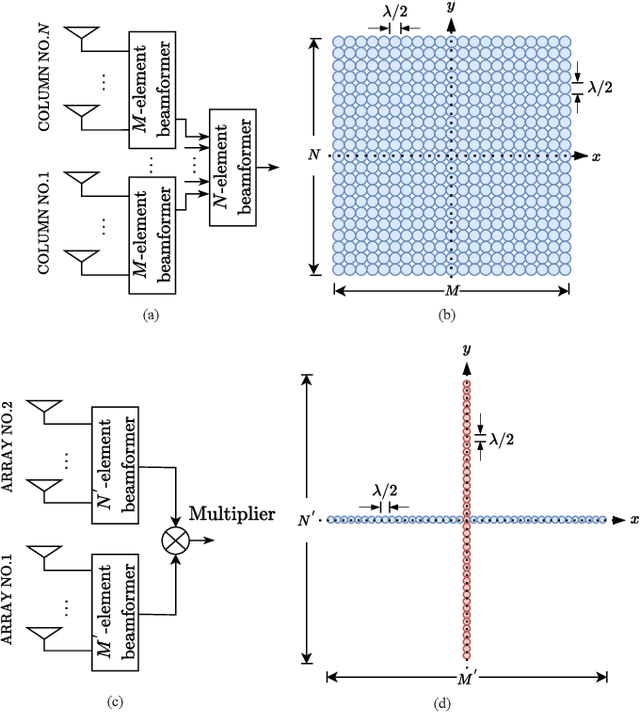
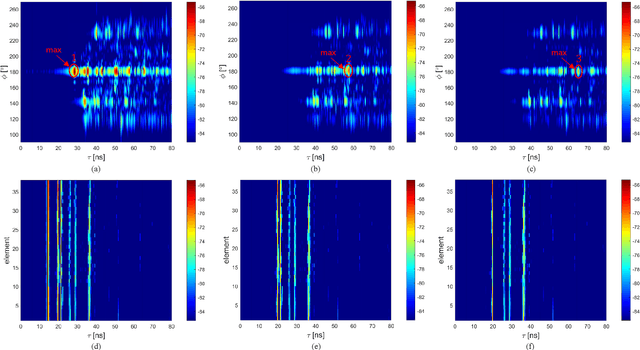
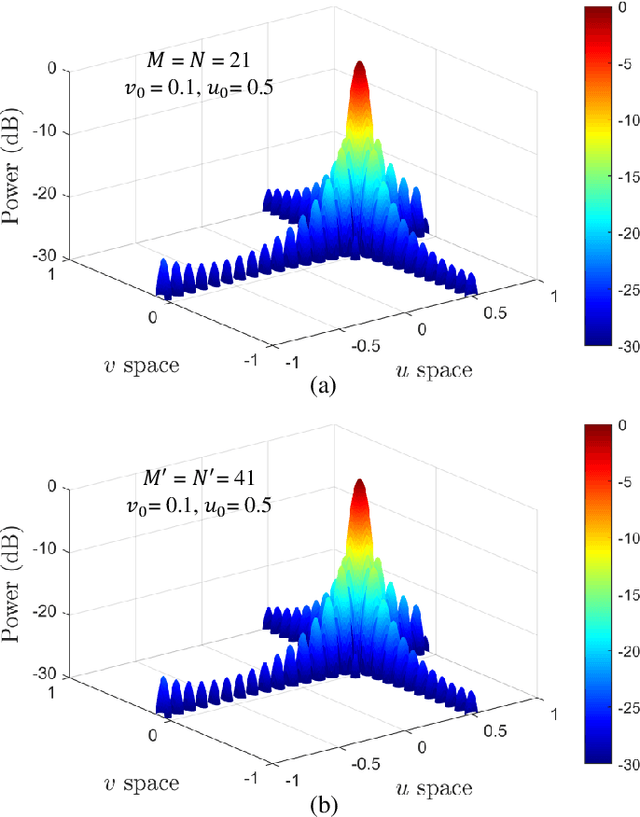
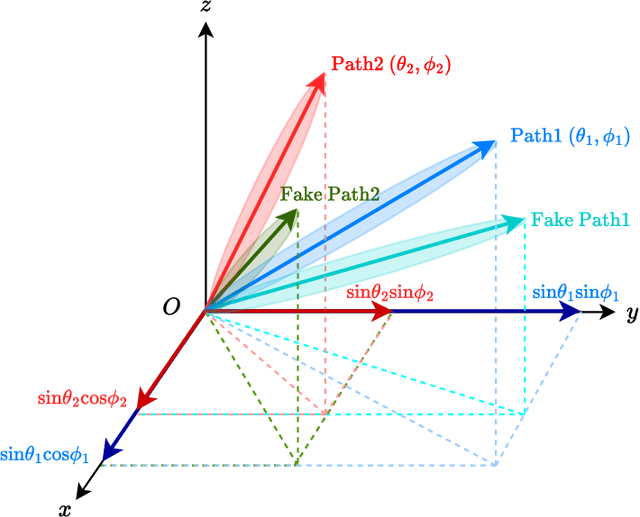
Ultra-massive multiple-input and multiple-output (MIMO) systems have been seen as the key radio technology for the advancement of wireless communication systems, due to its capability to better utilize the spatial dimension of the propagation channels. Channel sounding is essential for developing accurate and realistic channel models for the massive MIMO systems. However, channel sounding with large-scale antenna systems has faced significant challenges in practice. The real antenna array based (RAA) sounder suffers from high complexity and cost, while virtual antenna array (VAA) solutions are known for its long measurement time. Notably, these issues will become more pronounced as the antenna array configuration gets larger for future radio systems. In this paper, we propose the concept of multiplicative array (MA) for channel sounding applications to achieve large antenna aperture size with reduced number of required antenna elements. The unique characteristics of the MA are exploited for wideband spatial channel sounding purposes, supported by both one-path and multi-path numerical simulations. To address the fake paths and distortion in the angle delay profile issues inherent for MA in multipath channel sounding, a novel channel parameter estimation algorithm for MA based on successive interference cancellation (SIC) principle is proposed. Both numerical simulations and experimental validation results are provided to demonstrate the effectiveness and robustness of the proposed SIC algorithm for the MA. This research contributes significantly to the channel sounding and characterization of massive MIMO systems for future applications.